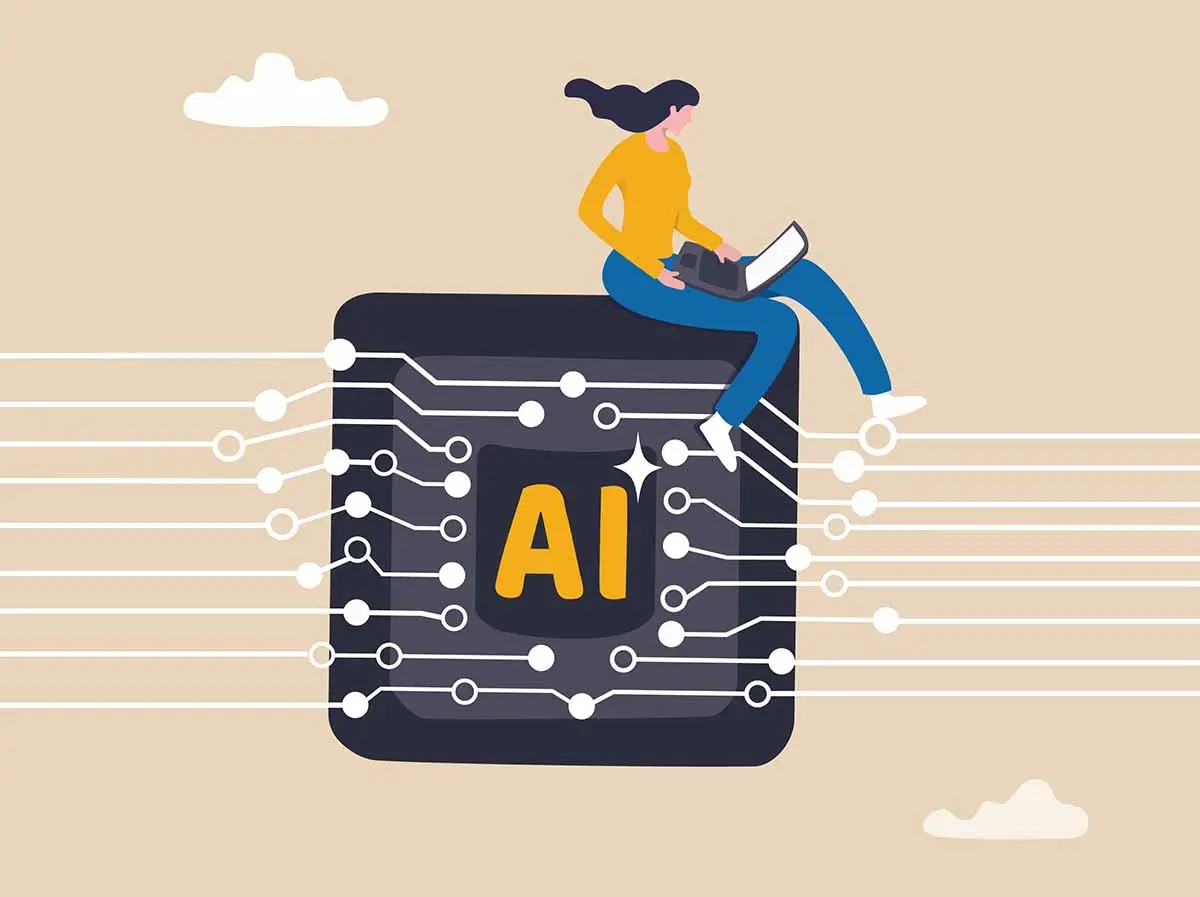
AI is not coming for experienced consultants. It’s making the good ones faster and more valuable. Here are three ways working consultants are using it right now to cut hours of work down to minutes.
From porch chats to AI debates
Every morning, my husband and I start our day the same way — coffee in hand, sitting on the porch or by the fireplace, depending on the season.
It’s our quiet ritual before the day kicks off. And lately, our conversations have been dominated by one thing: the pros and cons of AI.
For him, who’s wrapping up a 30-year career in IT and preparing for his company’s final exit, there’s a calm certainty in his stance. He’s not planning to work for anyone else again — so the idea of diving into AI feels unnecessary.
I tease him that he reminds me of the Cobol developers after Y2K who refused to retool for Visual Basic or Java… and ultimately found themselves forced out of the workforce.
Me? I’m the opposite.
I use AI every single day. I’ve taken courses, tested tools, and I’m even considering joining a mastermind focused entirely on how AI is reshaping the coaching and consulting world.
Whether you’re more like me or more like him, one thing is certain: AI is here — and it’s not slowing down. And if you’re building a consulting business — or even just starting to consider it — how you respond now will shape what comes next.
The big idea: AI isn’t the threat — staying the same is
Your fear of being replaced is valid — but the opportunity is even bigger.
The World Economic Forum’s Future of Jobs Report 2025 estimates that 92 million jobs may be displaced globally by AI and automation by 2030.
But here’s what the headlines don’t tell you: 170 million new roles are expected to be created, for a net gain of 78 million jobs. And those roles will require the very things experienced consultants bring to the table — adaptability, emotional intelligence, strategic thinking, and leadership.
Still, it’s normal to feel threatened. Our brains are wired for familiarity and control. When something new (like AI) disrupts that, it lights up the part of the brain that signals danger.
But here’s the reframe:
AI isn’t your competition. It’s your co-pilot.
It’s not about becoming an expert overnight. This is about curiosity. And the courage to evolve how you work — before the market decides for you.
How are consultants using AI?
Real-world use cases — from solo consultants to global firms.
1. Research & Insight… in Minutes, Not Days
Tools like ChatGPT, Claude, and Perplexity.ai are cutting research time by hours.
At ThriveHive, one consultant serving health tech startups used to spend 6–8 hours on kickoff prep. She now uses ChatGPT to generate a client insight brief in under 15 minutes.
Meanwhile, in Big Consulting Land: McKinsey’s Lilli (an internal AI trained on 100K+ docs) helps consultants prep faster, and BCG’s GENE and Deckster tools support project research and auto-build client decks.
Takeaway: You don’t need a research team — you need better prompts and an AI sidekick.
2. Packaging your IP into scalable products
Your unique way of solving problems is an asset. AI helps you scale it.
At ThriveHive, we built The Niche Navigator, a custom GPT that helps women consultants define their most profitable niche in under 30 minutes. We also drafted our new e-book using Claude and polished it with ChatGPT.
What the giants are using: Deloitte’s Sidekick supports proposal writing, financial modeling, and client briefs, while EY and PwC use firm-trained AI to streamline deliverables and automate compliance docs.
Takeaway: Your brain is your business. AI helps you deliver it at scale.
3. Creating branded deliverables — fast
Hiring a designer isn’t just expensive — it also costs you in rounds of revisions and lost time. But with AI, design doesn’t have to be a bottleneck.
At ThriveHive, we loaded a new e-book into Gamma.app and had a polished, on-brand PDF ready in minutes. In the past, this project would have taken us 30 days and multiple rounds of revisions.
Even Accenture and IBM are doing it — both use AI-powered design tools for client decks and training materials.
Takeaway: You don’t need a creative team — just smart tools and your expertise.
How should a consultant start using AI?
Think of AI as your newest hire — and lead it like a pro.
You’ve led teams. Managed change. Trained new hires. So think of AI as your newest executive admin. It’s free. Available 24/7 and never burns out or takes a sick day.
But like any new hire, it needs a clear vision — and a little coaching:
- Share the vision of the project
- Define what success looks like
- Give specific feedback to refine results
- Add your 1% brilliance to elevate the final outcome
AI drafts. You deliver. That’s the winning combo.
Your AI game plan
Simple steps to build your confidence and momentum.
1. Start with ChatGPT
The paid version of ChatGPT ($20/month) gives you access to the latest version — offering faster, smarter, more accurate responses, file uploads, memory, and advanced tools that save you hours each week.
2. Practice leading it like an assistant
Try prompts like: “Outline a proposal for a consulting package that helps [X] solve [Y].” or “Summarize this 10-page article into 5 insights for my client.”
3. Build a 10-minute-a-day habit
Try small wins like rewriting a long email, brainstorming social posts, drafting LinkedIn bios, outlining a webinar, or reframing your elevator pitch.
4. Let it surprise you
At ThriveHive, our ChatGPT has become our newsletter co-writer, travel agent, social media partner, meal planner, and grocery list generator. Other uses from consultants we work with: SOP creation, event speaker bios, onboarding emails, pricing brainstorms, and research summaries.
Once you start, you’ll wonder how you ever did life without it.
The bottom line: AI won’t replace you — but consultants who use it will outpace those who don’t
This isn’t about tech — it’s about how you choose to evolve.
You’re not starting over — you’re evolving. And consulting isn’t a reinvention — it’s the next chapter of your career. The goal isn’t to master AI overnight — it’s to build confidence by using it daily in small, meaningful ways.
And remember — you were made to thrive.
Not sure what you'd even consult on?
Start there. Answer eight questions to discover your consultant type and get a personalized Consulting Success Report mapping the fastest path to your first client.